For even more Disney+ Binge-Watching suggestions from your friendly neighborhood Boardwalk Timesers, check out Most Anticipated Binge Watching for Disney+: The Libraryand The Originals, as well as The Renaissance Part I.
The Lion King (1994)
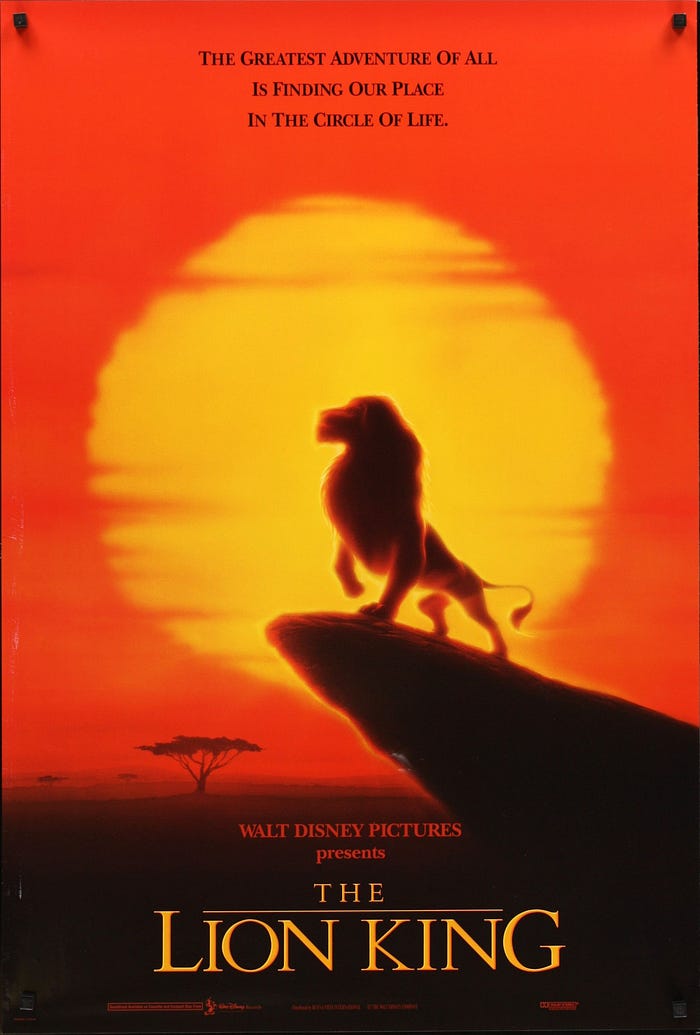
The apex of the Disney Renaissance, when the new executive leadership of Michael Eisner, Frank Wells, Jeffrey Katzenberg and the old guard of Walt Disney Feature Animation led by Producer Don Hahn perfected the formula brought from Broadway by Howard Ashman and Alan Menken. While Ashman had since passed and Menken wasn’t part of this film, The Lion King’s musical team of lyricist Tim Rice, soundtrack composer (Sir) Elton John and score composer Hans Zimmer certainly stood upon their shoulders while creating the masterpiece.
The Lion King grossed over $968 million dollars, making it the highest-grossing release of 1994, the highest-grossing animated film and the second-highest-grossing film of all time. The film’s music won two Academy Awards, and The Lion King took home the Golden Globe for Best Motion Picture — Musical or Comedy.
And, of course, the film has spawned a franchise including two direct-to-video sequels, two spin-off television series and a 2019 “live-action” remake, headlined by Donald “Childish Gambino” Glover and Beyonce.
Pocahontas (1995)
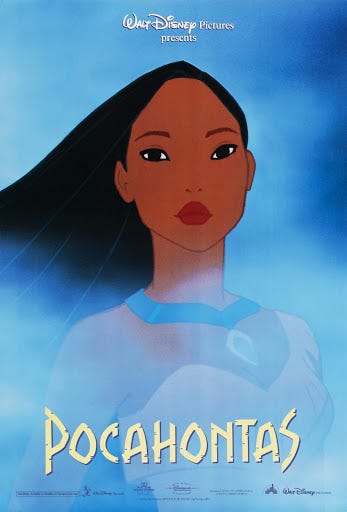
The concept of adapting the tale of Pocahontas into a Disney Animated Musical dated back to 1990. While in pre-production, Beauty and the Beast had been nominated for the Academy Award for Best Picture, convincing Walt Disney Studios Chairman Jeffrey Katzenberg to take “creative liberties” with the legend in order to spin the story as a more serious, adult romance in order to appeal to the Motion Picture Academy.
While reviewers rightly criticized the film’s story for its poor representation of history, Native Americans and race relations, the film’s animation, musical score and soundtrack were widely praised. Pocahontas won the Academy Awards for Best Musical or Comedy Score and Best Original Song. The film was also a financial success, grossing over $346 million.
However, things were not all well at The Walt Disney Company during the final production and release of Pocahontas. Frank Wells, President and COO, perished in a helicopter crash on April 3, 1994, and subsequently, Chairman and CEO, Michael Eisner had a heart attack and received stents in order to improve heart health. Additionally, when Katzenberg was not appointed to Wells’ vacated positions, the relationship between Eisner and Katzenberg deteriorated and the Studio Chairman left the company.
The dream team was crumbling, and, as many feared, the Renaissance would soon follow.
The Hunchback of Notre Dame (1996)
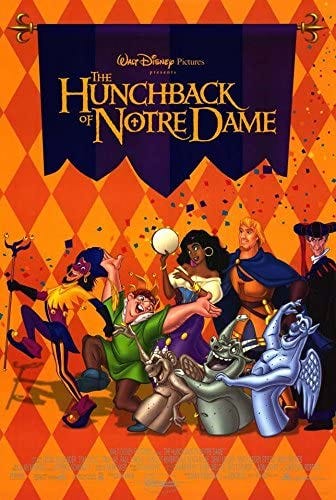
The Hunchback of Notre Dame was put into production by Studio Chairman Jeffrey Katzenberg alongside already in-progress films The Lion King and Pocahontas. Due to demand on animators, many new hires to Walt Disney Feature Animation were put on Hunchback to save veteran animators for the tent-pole films. However, as production moved along and the other films were being finalized, Team Hunchback was given some power players: Producer Don Hahn, fresh off Lion King, and the songwriting duo of Steven Schwartz and Alan Menken, the latter of whom also composed the film’s score.
Hunchback was originally slated for a Christmas 1995 release, however, due to the tragic circumstances of Frank Wells’ death and the subsequent departure of Katzenberg, the film was delayed. Premiering in June 1996, The Hunchback of Notre Dame continued the chain of Disney Animation’s financial successes, grossing over $325 million. Menken’s music again was nominated for an Academy Award and a Golden Globe, however, unlike most Renaissance films to this point, Hunchback did not take home any hardware from the premier award shows.
Hercules (1997)
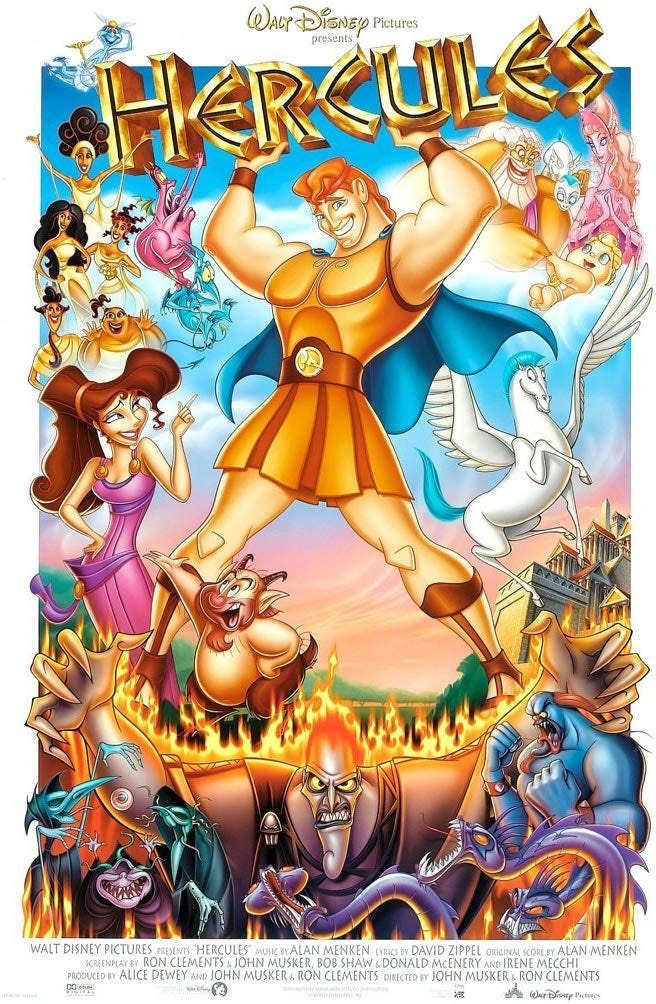
Following the success of Aladdin, the directing duo of Ron Clements and John Musker once again tried to pitch their passion project, an animated re-imagining of the classic Treasure Island — in space, to Walt Disney Studios Chairman Jeffrey Katzenberg. Katzenberg told the duo he would consider it after they produced one more box office-friendly feature, and he assigned Clements and Musker to Hercules.
Clements & Musker made the best of the disappointing situation, looking at the bright side and seeing how this could be their chance to make a “superhero” movie, while also entertaining the idea that Hercules could be imagined as Ancient Greece’s Michael Jordan, the Chicago Bulls star who was omnipresent in 1990s marketing campaigns.
Hercules was released to positive reviews, particularly of the animation style, which took cues from Ancient Greek vase painting, and of James Woods’ performance as the villain, Hades. However, the film was considered a financial failure, given the high expectations of the Disney Renaissance. Hercules grossed only $58 million in its first two weeks, dwarfed by Pocahontas’ $80 million and The Lion King’s $119 million in the same span.
Mulan (1998)
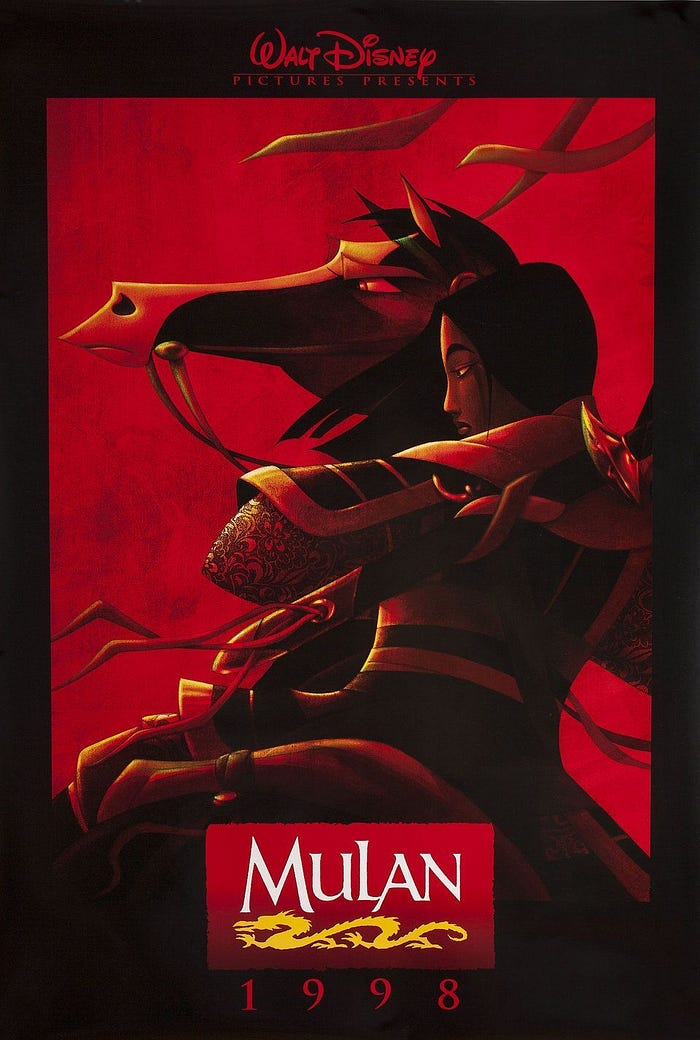
The scrappy underdog of the Disney Renaissance, Mulan was the first animated feature created primarily out of Walt Disney Feature Animation Florida, headquartered at the studio-theme park hybrid: The Disney-MGM Studios at Walt Disney World Resort. Additionally, Mulan was not afforded the behind-the-scenes star power which many Renaissance films were — no big-name director team, no star producer, no Alan Menken, even. In fact, after the recent financial disappointments, Mulan was given less than half of the marketing budget of the previous year’s release, Hercules.
Yet, as Mulan’s own father would say, the flower that blooms in adversity is the rarest and most beautiful of all. The film grossed more than $304 million, out-grossing the previous two Disney animated features, The Hunchback of Notre Dame and Hercules, both of which had larger production and marketing budgets and were helmed by Disney royalty in the production, direction, and soundtrack departments.
Tarzan (1999)
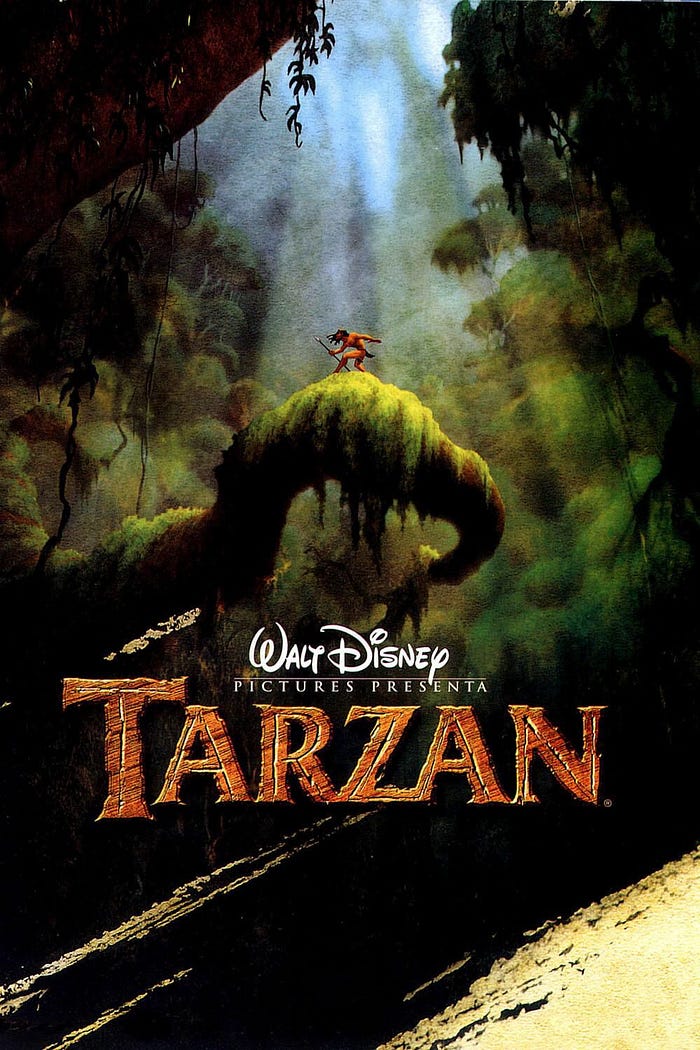
Tarzan, the first Disney Animated Feature to break from the Broadway Musical-style formula that began the Disney Renaissance with 1989’s The Little Mermaid, would also be the last Disney Animated Feature to enjoy both critical and commercial success until, arguably, 2009’s Princess and the Frog.
Instead of a Broadway musical duo of songwriters, the soundtrack was written and composed by rock legend Phil Collins, and many of the songs were sung by Collins, himself, as directors Kevin Lima and Chris Buck wanted to move away from musicals, where the characters sing the dialogue as a way to move the plot forward. Collins’ “You’ll Be in My Heart” won the Academy Award and Golden Globe for Original Song, and the film grossed over $448 million, making Tarzan the most commercially successful Disney Animated Feature since The Lion King.
Come back soon for more of Boardwalk Times’ Disney+ binge-watching suggestions.
Austin Vaughn is a Columnist for the Boardwalk Times