I want to start this article by making a couple of things clear. The argument that follows is not about the merits of a Princess and the Frog attraction, or even a critique of Disney retheming Splash Mountain in the face of public backlash. Instead, this is an argument that it is understandable that people will miss the attraction and a case for why Splash Mountain worked.
Before we get into the recent developments in the Magic Kingdom, I want to pull things back a bit and make a few general assertions. Let’s start with this, throughout its early history the Magic Kingdom (and Disney’s castle parks in general) have been built on two foundational tenets- Americana and nostalgia.
The Magic Kingdom, like Disneyland before it, has relied on Americana to give the park both an ethos, and the emotional depth needed to create cohesion. At its core, the park is an expression of American culture, divided by genre, and ever-changing, yet still grounded in the American story. The story of the park begins with a historical celebration of the country’s founding, continues through the tall tales of the Old West and the idealization of small-town life, expands its horizons through exploration of a world apart from civilization, and ends with the promise of a better future.
While Americana has always been the story that the Magic Kingdom told, it has not been the driving force behind its popularity. The park at its core is a peddler of nostalgia. While Disney often throws around words like “magic”, “dreams”, or “wishes”, what the Disney parks really rely on is something deeper and more personal- our memories, both individually and collectively.
The thing that brings us all back to Disney isn’t the individual rides, lands, or even parks themselves, its the feeling of nostalgia that being there evokes. This nostalgia takes on many forms, whether it be for a time when we were young, people that we visited the parks with, or even just the memories of the characters and movies that have come to life around us. For those of us who visited the park when we were young, the parks become a place where we remember loved ones that have passed, the innocence that we lost, and the joy of time well spent.
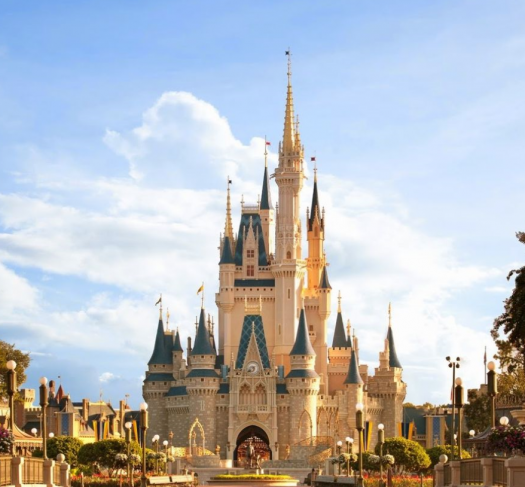
A frequent retort to complaints about changes to Disney parks is often “if you don’t like, don’t go”, but this is inherently unfair. For many of us, Disney has a monopoly on nostalgia. It’s not theme parks that we love, but an esoteric feeling that comes from being in the same theme park where our cherished memories occurred. This feeling of nostalgia can be attached to anything within the parks. Maybe you hated the giant Sorcerer’s Hat at Disney’s Hollywood Studios, or you think that Pandora is an upgrade over Camp Minnie-Mickey at Disney’s Animal Kingdom, or you were happy to see Innoventions finally put out of its misery. But for others, these attractions and lands were quintessential Disney. Many grew up with these places, made powerful memories there, and even looked forward to coming back to visit an old friend. Whether the change was intellectually or thematically for the better is beside the point. People develop profoundly deep attachments to the experiences within Disney’s parks, so let them mourn their loss.
Now that we’ve fleshed out the idea of Disney as a dealer in nostalgia, let’s circle back around to Americana, and specifically dive into Splash Mountain. As I briefly laid out, the Magic Kingdom, at its core, is a park about American lore. It starts in 1776 with the country’s founding in Liberty Square. Here, early American ideals and history are celebrated and remembered. Anchored by the Hall of Presidents, Liberty Square is the land most rooted in history however narrow the lens may be. The story is expanded, in Frontierland, where America stretches west and tall tales come to life. Main Street USA to the contrary, takes an idealized look at American small-town life. The turn of the century setting was specifically designed to produce nostalgia (Disneyland’s first guests would have been old enough to have lived during the time that Main Street is set) and a longing for simpler times. Likewise, Adventureland portrays the fascination that post-war America had with the unexplored world, while Tomorrowland, shows what the world could one day be.
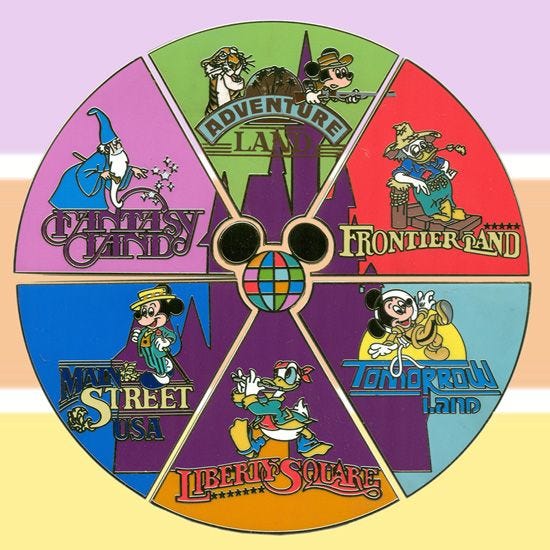
Finally, there is Fantasyland, which you may have noticed I omitted earlier. This land works on two levels. Most obviously, Fantasyland is a place where the Disney movies really come to life. Familiar characters can be seen, songs heard, and stories explored. These largely European stories are experienced through the Americanized lens that Disney told them with. While neither Cinderella, Ariel, Belle, or Alice originated in America, their narratives have been retold and popularized by a distinctly American company. These stories, whether through the lasting power of their original forms, or through the storytelling ability of Disney, have become foundational to American culture. They have become classic Disney stories, and thus omnipresent in American consciousness.
Like the Fantasyland attractions, the Magic Kingdom’s other lands tell stories that are ingrained in American culture. These disparate tales find their cohesion through their celebration of Americana. The Enchanted Tiki Room does this by reminding guests of the post-war Tiki craze, and the musical revue style shows popularized in the 1940’s and 1950’s. Similarly, the Country Bear Jamboree offers some of the last vestiges of Vaudeville and the country music barn dances of the 1920’s and 30’s. The Walt Disney Railroad and the Liberty Belle recall bygone times when steam powered the country. Similarly, the Tomorrowland attractions like the Carousel of Progress, Tomorrowland Speedway, and even Space Mountain are firmly rooted in the 1950s and 60s, when American innovation would eventually lead to man walking on the moon. These are the stories embedded in the American consciousness, and that brings us to literature and Splash Mountain.
The final foundational medium that the Magic Kingdom is built on, is literature. From the Adventures of Tom Sawyer, to the Swiss Family Robinson, or even the pulp fiction stories of Buck Rodgers, the influence of literature permeates the Magic Kingdom’s lands. And here lies the argument for the value of Splash Mountain.
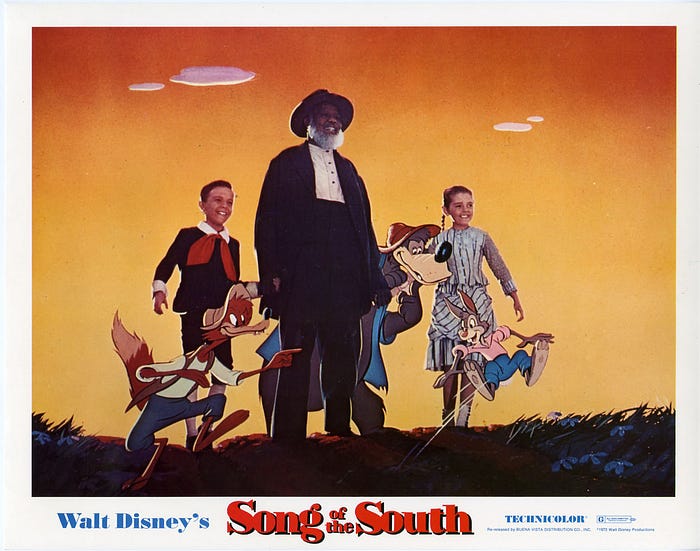
Let me be clear, this is not a defense of “Song of the South”. The movie is problematic and probably should remain locked inside the Disney vault. What I am suggesting, however, is that the characters depicted in Splash Mountain have long been divorced from the movie, both by the public and by Disney itself. What remains then, is a Disneyfied version of the Brer Rabbit stories that come from African folklore, and belong first to Black culture. Let’s go through their timeline.
The Brer Rabbit stories entered the American consciousness through the tales told by African American slaves. Taken from African folklore, they were passed down orally from generation to generation until they were finally written down, first by Robert Roosevelt in Harper’s Weekly, and then more famously by Joel Chandler Harris. It was following Harris’ publication that the folklore was popularized and the characters and tales began to seep into the broader American culture. These folklore stories, initially told in Africa, persevered through the horrors of slavery, and passed down orally for generations, entered the American consciousness, and stuck. The problem, however, was that the stories were now being retold by a white man, mimicking the dialect and storytelling of African Americans. It is this version of the Brer Rabbit stories that would inspire Disney to create Song of the South, which would in turn give Splash Mountain its theme.
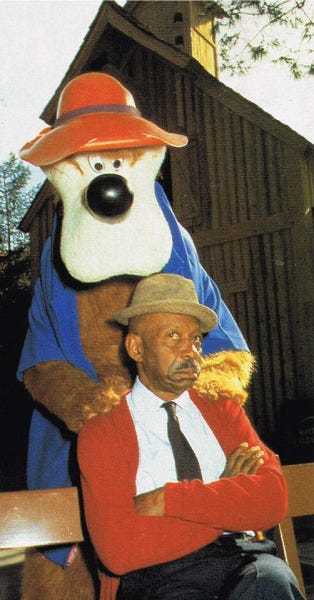
While the Brer Rabbit stories have been preserved and remembered against unbelievable odds, in the modern world, the folklore is best remembered through the Splash Mountain attractions. The question is, however, are the stories depicted in the attraction inherently racist due to the film that they took their inspiration from? I think the answer is no, and the story told in Splash Mountain can stand on its own, apart from Song of the South. If this is true, then the attraction is simply giving representation to the Brer Rabbit stories. I think this representation, this continuation of the retelling of the folklore, gives Splash Mountain value. It is a unique piece of Americana, that tells a story created by African Americans trying to pass on their own heritage and culture. I fear that without Splash Mountain to tell their story, these characters will fade from our collective consciousness, and that is a shame.
In addition to this, within the context of the Magic Kingdom, the representation of the Brer Rabbit stories is by far the most prominent portrayal of a story that began in Black culture. It is unique within the mosaic of the Magic Kingdom. By representing both the early African American culture and a distinctly southern setting, Splash Mountain adds depth to the park’s larger story of American lore. The unique story that Splash Mountain has to tell fits well into the park’s Americana theme, and it makes the Magic Kingdom a richer park.
It is the loss of the Brer characters, and the memories that we’ve made with the attraction, that for me and many others will make us miss Splash Mountain. Like the removal of the Great Movie Ride and Maelstrom, the renovation of Splash Mountain will change the story of Frontierland itself. It may be for the better, and it may not, but a big change is coming to the Magic Kingdom, and I think it is permissible to mourn the loss.
The Mickey Wiki is a Columnist for the Boardwalk Times