


I find myself endlessly starting and stopping articles as the days begin to bleed together. Nothing feels real anymore, as I’m sure you’re well aware. What we once found to be a menial grind of daily responsibilities has become a dream of the past, and more realistically, been reframed as the necessary structure keeping us from breakdown. The news cycle that I once found endlessly frustrating, especially in the theme parks community, has suddenly disappeared. In its absence, it has left a void, one in which conversations, creativity, and passions die a miserable death.
The prospect of finding myself without another endless debate, absent-minded review, or torrential downpour of faceless complaining would have been more dream than nightmare if offered a year ago. However, I may have reveled in its presence at the inception, but I now find myself craving its disappearance. Contrary to popular belief, my hate was not trivial. Choosing to emphasize my passion through content introduced energy into an aspect of my life that I appreciated. Nobody looks to be negative, but a critical perspective often leads to a greater appreciation of the relevant subject matter.
We reach a crossroads then. If directing energy to a subject reinforces your passion for it, then the contrary must also be true. Should an individual lack said energy, then they must also see some inhibition to their allocated passion. Passionless attention leads to empty interest, slowly fading as sources of intrigue fail to appear. I may have been a Disney fan before the virus, but a steady lack of content and other social factors continue to erode what’s left of my passion.
This isn’t an overdramatic resignation letter (far from it), but it does serve as a transition into a more meaningful discussion. The last piece I wrote about the Disney Parks and COVID left a far more dismal impression than what was common at the time. Call it foresight or call it cynicism, but my conclusion that average consumers would turn away from crowded institutions in favor of safer alternatives seems to be holding strong. Interest in theme parks is at an all-time low and those that continue to make the pilgrimage are mostly superfans, professional reporters, or the embarrassingly inept “anti-maskers” who deny the existence of the virus whatsoever. Like it or not, the general populace has no interest in returning to movie theaters, sporting events, or theme parks.
Life has given us a break from daily circumstances. If a process is repeated enough it becomes normalized, which eliminates critical analysis of that process’s value. Take for example the story of Sisyphus, doomed to push a boulder up a hill for all of eternity. The futile labor will eventually be normalized in his mind, and will one day cease to be punishment and become life itself. What if, however, at some point in the future he was allowed to stop at a time of his choosing? Would he do so? If we use our own resistance to change as justification, we may find that he would continue such torment as a method of maintaining some status quo. Sometimes the most simple response to tedium is to maintain it, otherwise, a reality of wasted time must be validated.
The Disney community isn’t dead, but many are now realizing that the brand they once admired has been delivering subpar content without proper critical analysis. We find ourselves in a dormant period, one in which the company has nothing to deliver and fans have time to properly reflect on what came before. Businesses should treat the profit margin loss as a moderate hurdle in face of a greater fear: time for the consumer to realize the trap they’d been swindled into.
First, let’s split the Disney company down the center and approach two of their creative outlets: Theme Parks and Film/Television Entertainment. We can analyze each and determine the factors consumers may realize are predatory or creatively bankrupt during this reprieve. Then, we’ll direct focus on what was supposed to be Disney’s biggest innovation of the decade: Disney+. Here, we will question whether the service has reached the promises offered by the brand at the start and if the program has retained its value. Finally, we’ll make mention of the community at large, and discuss how toxic tactics of hate mobs and faceless harassment have risen to the surface, showing us how terrible things truly were.
Entertainment

Theme Parks
For the sake of fairness, we can ignore any conversation as it pertains to the quality of Disneyland. Though many issues with the resort may arise during its downtime (such as the parasitic relationship with Anaheim, lack of affordable on-property hotel locations, inconsistent quality of new attractions, etc), it is mildly unfair to discuss the park from the lense of quarantine when it hasn’t been open since pandemic’s onset. I’d like to address these issues at some point, but not until the park has reached a comfortable equilibrium.
When it comes to Walt Disney World, however, guests may be finding themselves finally questioning realities originally assumed to be essential for the experience. For example, if guests visit the Walt Disney World booking page and attempt to secure a hotel, they may find themselves in awe over the exorbitant hotel pricing. For the quality of the stay, and in relation to other hotels around the world, the day-to-day pricing ranges from uncomfortably expensive to outrageously unrealistic.
I hate to dredge up old news, but the most recent additions to the Walt Disney World family of hotels leave much to be desired. Though the scale and thematic design of the Gran Destino Tower and Rivera Hotel are mildly impressive from the outside, the interior feels far less unique. It seems that at some point, hotel designers for the parks prioritized available space over thematic intricacy. This isn’t to say they resemble a Motel 6, but to highlight a greater hubris within the company. No longer were they attempting to attract consumers with unique experiences, but corral a flood of customers desperate for “magic” into any space they could call a room. “Disney World” was no longer a leisure trip tangential to society, but a necessary pilgrimage for every American family (lest they want to disappoint their children).
Thus, we begin to notice a trend. The newest hotels at the resort emphasize minimalism in order to sell less for more. A desperate father has already been sold on the park without the necessity for greater thematic immersion, which allows Disney to curtail costs to no financial loss. Why bother spending the money to offer highly detailed hotel experiences when you’ve already created a FOMO with the parks? Before the pandemic, Disney recognized its cultural dominance and began to limit spending accordingly. Doing otherwise would be a waste of potential profit, seeing as consumers needed no persuasion to visit the resort.
It seems, then, that the pandemic has undercut this confidence. Consumers are now faced with a decision: Which do you value more: your safety or your happiness? It’s no surprise that Disney has canceled their lakeside lodge “Reflections”. The incredibly bland concept art and running trend of Hilton-esqe rooms may have worked when Disney had guaranteed profit, but in a time of uncertainty, they can’t risk delegitimizing the brand with flavorless nonsense. A minimalist resort with average rooms and very little Disney “magic” (aside from a big Pochahontas statue) would never bring guests back to social gatherings, let alone reinforce the Disney “ magic” that may be their only hope of returning capacity to its original glory.
Don’t fret; Disney may actually have an ace up their sleeve. The incredibly bland hotels may be on their way out, but development in themed immersion could very well offer a new standard unlike anything ever seen before. Guests may not be inclined to return when the offerings are familiar (why risk your life for something you’ve seen?), but the Star Wars: Galactic Starcruiser offers something fundamentally innovative. If consumers are looking to leave an Earth rife with conflict and disease, they may have an opportunity to do so (at least internally). The Starcruiser will use state of the art technology to offer an immersive experience to guests in a pandemic friendly way. Assuming all guests are tested before visiting, the restrictions of leaving and limited park attendance will ensure that the risk of transmission is minimal.
However, one fact mentioned previously undermines the potential for future development. When attending the Galactic Starcruiser, guests must follow a set itinerary in order to preserve the thematic storytelling. That’s right, guests aren’t allowed to attend other parks or leave the property. Though this may work for one experience, it seems unlikely that it could be extended across the resort. Somehow Disney will have to bridge the incredibly immersive design of the Starcruiser with the expected freedom of the average hotel stay. Luckily for me, it’s not my job to figure that out. Good luck, Disney.
Film/Television
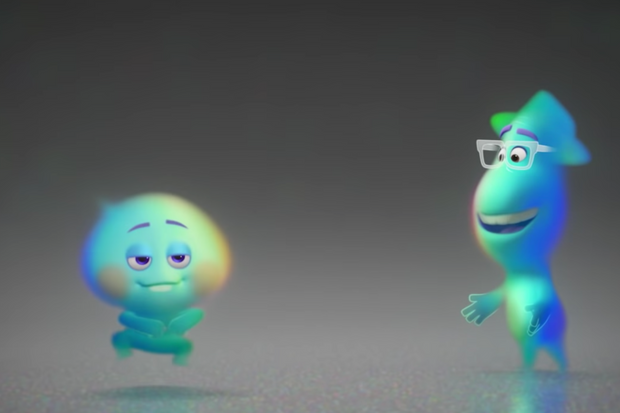
Disney’s cinematic prospects have come to an absolute standstill. What was supposed to be a bombshell year with the relaunch of the MCU in Black Widow, a brand new Disney-Pixar film Soul, and a potentially groundbreaking live-action remake of Mulan has devolved into a crash and burn.
(Note: This piece was written before Soul was pushed to Disney+.)
Starting with the most “up-in-the-air” property, the future of Soul has yet to be decided. The general talks amongst entertainment insiders are that the film very well may see a home release instead of a cinematic opening but this is balanced heavily on the success (or failures) of other company’s attempts at releasing a theatrical film. I think that the most likely outcome will be a home release, seeing as the decider film TENET failed to meet expectations. (Note: called it).
Mulan, however, did in fact release in Chinese theaters. American Disney+ subscribers had the chance to purchase the film (until December) for an additional payment of $30 on top of their monthly subscription, but Chinese audiences could visit theaters and see the film that was projected to rake in money overseas. To the chagrin of Disney executives, the film only made $66 million worldwide, $40 million of that coming from China. It’s clear that consumers have no interest in risking their lives for cinema, and the market will suffer for the foreseeable future until some sense of normalcy is achieved.
Disney seems to have realized the mistake of releasing a theatrical film in this climate, and have opted to hold Black Widow in the vault until May 7, 2021. The MCU has been a consistent cash cow for the company, and any release in a medium that will not guarantee blockbuster sales (i.e. Disney+) or an environment that prevents people from visiting the theater would diminish expected earnings in a devastating fashion. Unlike Soul, Black Widow is incredibly likely to make money in the theaters, and there exists an inverse risk rarely considered in entertainment. We often believe that it’s risky to release a potentially unwanted film, but in this case, the risk of holding on too long only grows by the month. Could it be the case that the zeitgeist and consumer base move on from the property before release? Only time will tell.
The failure of Mulan may offer some interesting commentary on audience perspectives. Before the pandemic, consumers were looking for any reason to deposit excess income into Disney’s pockets. Every live-action remake was financially successful (ignore Dumbo etc.), and it looked as if anything Disney touched had turned to gold. However, almost like the pandemic has given audiences time to reflect on communal gatherings, it may have allowed consumers to recognize the wasteful manner in which they spend their money. Like it or not, most of the films released by Disney are focus group tested slop made only to capitalize on years of spoonfeeding “cultural importance.” The theme parks and cinematic ventures may face a singular problem in the next decade: after a small reprieve, the company must now start from square one. As evident by the dismal performance of Mulan, Disney now has to convince the world that we desperately need to see the next film. We are no longer dependent on their entertainment; they’re dependent on our mercy.
I would be remiss if I didn’t mention Disney’s television properties and performance over quarantine. Excluding anything on Disney+ (we’re about to get to that), I assume that I would be attacked by Ryan O’Reilly if I didn’t give a nod to what very well may be Disney’s most reliable output in the last decade. The television animation on The Owl House, Duck Tales, Amphibia, Big City Greens, and other shows have been admirable in both scope and quality. Maybe it’s because Disney sees the home television market as the one reliable source of income over a quarantine. Maybe it’s the easiest type of entertainment to create when the crew has to work over Zoom. Or, as I believe to be the reason, maybe Disney executives believed television to be a dying medium, lifted their normally restrictive and homogenized limitations on the creators, and provided the freedom necessary to create meaningful art.
Just a thought.
Disney+
We now turn our attention to one of Disney’s greatest passions and most disappointing failures. In a financial sense, the service has made an admirable attempt to dethrone streaming giants in the field. As an artistic product, Disney+ is so fundamentally deprived of content as to be worth less than the bandwidth it resides upon.
Here’s the problem: Disney+ has none of the new content that a streaming service requires. If the consumer has already experienced most of the Disney library, then they have seen all that Disney+ has to offer. The promises of original content were appreciated at the start, but the failure to follow through in that assurance directly reflects the mindset of the company. The fact of the matter is that there has been no meaningful content added to Disney+ since the start of this quarantine. Not since The Mandolorian has Disney+ been home to a piece of new content worthy of our attention, and frankly, it may never do so again.
But, as you may already be thinking, “we’re in the middle of a pandemic, and it’s unreasonable to ask for a strong flow of content when production is limited!” That may in fact be true, it is unreasonable to expect a lot of content during this restrictive time, but at the very least we should be seeing any of the products in development before the quarantine began. Netflix has had no issue with original content, yet Disney+ couldn’t be bothered to give more than Muppets Now! and a few cheaply made reality shows. This problem must not lie with the pandemic, rather, it lies with an incredible case of mismanagement and a failure to maintain what was once promised.
Disney+ represents in the fine print the Disney company ego. To the shareholders and management, consumers are already going to purchase the product as a result of the branding. Does this sound familiar? Just like they expect consumers to visit a park solely on the brand-name, they anticipated consumers would purchase their streaming service on the simple premise that they can access “new” “Disney” “content.” In a generational economic downturn, this promise will no longer be enough to satiate picky consumers.
It’s time to stop lying to ourselves. Disney+ has been on the market for nearly a year and has yet to justify the price tag. Content trickles out at an embarrassingly slow rate, and what does release often reflects incredibly poorly on the service itself. In this case, Disney has chosen quantity over quality, and the weekly disappointment of checking for new content grows more monotonous on every subsequent renewal date.
It’s time for Disney to pick up their game and get vicious with their content practices. Otherwise, they’re doomed.
The Community
I want to conclude with a faceless representation of the Disney community at large. If you are not a part of the group at large or choose not to interact with them, you are free to ignore the rest of the piece. This will be a conclusion of sorts, but one relevant only to the social environment that surrounds Disney fandom. Many people choose to ignore this cultural subset, and I don’t blame them. If you are a member of this group, make your choices wisely.
I have never been an avid member of the community. Admittedly, I haven’t been an avid member of any community, as I find my greatest strength to be exposed in solitude. I prefer to watch from afar, whether it be as a result of false superiority or general anxiety. Nevertheless, I must note that what I continue to see has been continuously disappointing.
Quarantine has offered many the often ignored opportunity to reflect. We begin to reflect on how we spend our money. We reflect on what we truly enjoyed in life, and how we decided to live before our freedoms were limited. In this metaphorical limbo, we float in an ethereal pause, looking back and deciding what we require as we move forward. Call it trimming the fat, or call it spring-cleaning, either way, it represents some form of individual enlightenment. Maybe we don’t need to give into all of Disney’s financial demands. Maybe we don’t need to support artistic foundations that fail to innovate and update while still drawing more and more money per year. Maybe, just maybe, we can eliminate these toxic sources and ask for better.
On the internet, many communities have taken this time to reflect on those within. Since the start of quarantine, many groups have begun to expose and expunge those they find to be problematic or contributing to a toxic environment. Instead of accepting these people as given, this moment of reprieve allows for social restructuring. When the focus can be applied, we have the ability to devote attention to these meaningful issues.
However, certain groups have found a greater issue when beginning this reflection. Sometimes the problem is more than a few “bad apples,” as something poisonous is brewing under the surface. The Disney community is one such example, in which a purge of toxic members revealed exactly how many were complicit in harassment, toxicity, and sometimes stronger accusations. We were not able to make small adjustments during this time, as a greater realization unveiled itself: the Disney community is built upon a foundation of harassment and toxicity.
Nowhere is it more prevalent to find entire online personas devoted to attacking individuals for their opinions. Dare you make a mistake in the world, or perform something socially unappreciated, the “holier-than-thou” masses will rise to the challenge of tearing you down. For fun, these people pick a target for the day and load criticism on their back, often for something as meaningless as an artistic criticism. This does not occur in an isolated incident, rather, it became clear at the height of the “Splash Mountain Debacle” that the community’s central backbone relied on snark and bullying.
I am being very particular with my words, but I choose not to name any culprits in this article. I’m not here to write an expose on those that formed identity with Theme Parks and continue to use their self-appointed pedestal as a means of abuse. If you are in the “DisTwitter” community and have read this far, I’m certain that a few names have begun to spin in your head. A culture of dogpiling and elitism festered into a genuinely awful place for communication.
We may have reached a point where the community is long dead before it can be saved. A select few have devoted their time to exposing toxicity and harassment, but it is beginning to feel like the beginning of some end. What remains are a few from “the olden days,” forums that have been genuinely unbearable since their inception, and a couple of fans who just want to talk theme parks.
I suppose we’ll see what the future has in store. Know that nothing is given, nothing is certain, and now more than ever, you have the ability to guide the future.
Ryan Dorman is a Columnist and the Content Director for the Boardwalk Times. He can be found on Twitter at @OpentheDorman, and as a host of the Boardwalk Talk podcast on iTunes.


